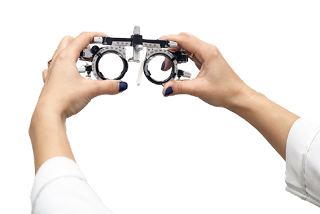




If you wear glasses for astigmatism, you’ve probably wondered at some point whether LASIK is an option for you. The short answer is yes but like most things in eye care, the fuller answer is a little more detailed than that.
What Is Astigmatism, Actually?


Most people with astigmatism know they have it but aren’t entirely sure what it means. Simply put, astigmatism happens when your cornea the clear front surface of your eye is not perfectly round. Instead of being shaped like a sphere, it’s shaped a little more like a rugby ball, curved more in one direction than the other.
This uneven curvature means light entering your eye doesn’t focus at a single point on the retina. Instead it spreads, causing blurry or distorted vision at all distances. Squinting helps temporarily because it changes how light enters the eye but it’s not a fix.
Astigmatism often occurs alongside myopia or hyperopia, which is why many people have a combined prescription that covers multiple things at once.
So Can LASIK Actually Fix It?
Yes. LASIK corrects astigmatism by reshaping the cornea with a laser making it more uniformly curved so that light focuses correctly on the retina. The laser is programmed to treat your specific corneal shape based on detailed pre-surgery mapping, which is why those measurements are so important before the procedure.
For most people with astigmatism, LASIK delivers excellent results significantly reducing or completely eliminating the need for glasses or contact lenses.
Are There Limits?
Yes, and it’s worth knowing them upfront.
LASIK works well for mild to moderate astigmatism. Very high degrees of astigmatism may not be fully correctable with LASIK alone and in some cases, a different procedure like SMILE, PRK, or ICL surgery may be recommended instead.
The other consideration is corneal shape. Astigmatism caused by an irregular corneal shape rather than a simple, predictable curvature difference may not respond as well to standard LASIK. Conditions like keratoconus, for example, need to be ruled out completely before any laser procedure is considered. This is why corneal topography mapping is an essential part of every pre-surgery evaluation.
What About Topography-Guided LASIK?
For patients with irregular astigmatism or more complex corneal profiles, topography-guided LASIK is worth discussing with your surgeon. This technique uses a detailed 3D map of your corneal surface to guide the laser more precisely than standard LASIK addressing irregularities that a basic treatment might not fully correct.
Outcomes with topography-guided LASIK for astigmatism are strong and it’s increasingly the preferred choice for patients who need a more customized approach.
How Do You Know If You’re a Candidate?
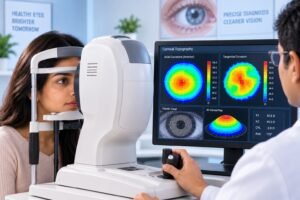
The only honest answer to that is a proper pre-surgery evaluation will tell you. There’s no substitute for a detailed assessment that includes:
- Corneal topography to map the exact shape and curvature of your cornea
- Corneal thickness measurement to confirm there’s enough tissue for safe treatment
- Refraction testing to measure the full extent of your astigmatism
- Tear film assessment to check for dry eye issues that need addressing first
These tests together give your surgeon the information needed to tell you clearly whether LASIK is right for your astigmatism, or whether a different approach would serve you better.
Getting the Right Evaluation in Gurgaon
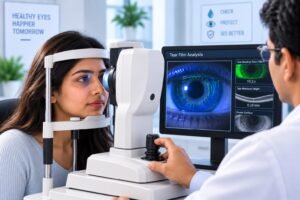
For anyone exploring specs removal surgery in Gurgaon for astigmatism specifically, the pre-surgery evaluation matters even more than usual because astigmatism correction requires precise corneal mapping and a treatment plan tailored to your exact corneal shape. A generic consultation that skips this detail is not enough.
The best eye specialist in Gurugram will review your topography maps in detail, explain what they show, and give you an honest recommendation based on your actual corneal profile not a one-size-fits-all answer. If LASIK is right for your eyes, you’ll know exactly why. And if something else is better suited, a good specialist will tell you that too, without pushing you toward a procedure that doesn’t fit.
conclusion
LASIK can absolutely correct astigmatism for the right candidate and for most people with mild to moderate astigmatism, it delivers clear, lasting results. The key is a thorough pre-surgery evaluation that maps your cornea in detail and confirms LASIK is the right approach for your specific prescription and corneal shape. Get that evaluation done properly and you’ll have a clear picture of exactly what’s possible for your eyes.
Frequently Asked Questions
Yes, LASIK can correct many cases of astigmatism by reshaping the cornea and improving how light focuses on the retina. It can often treat astigmatism along with nearsightedness or farsightedness, reducing dependence on glasses or contact lenses. However, not everyone with astigmatism is suitable for LASIK. Factors such as corneal thickness, eye health, prescription stability, and the type and severity of astigmatism must be evaluated first. Dr. Keya Barman performs a detailed eye examination to determine whether LASIK is appropriate for an individual patient. A personalized evaluation is essential for achieving safe and predictable vision correction.
LASIK can correct a range of astigmatism, but the exact amount depends on the patient's prescription, corneal shape, thickness, and overall eye health. There is no single limit that applies to everyone because eligibility is determined individually. During the pre-LASIK evaluation, Dr. Keya Barman checks corneal thickness, topography, refraction, and other important eye measurements. These tests help determine whether the level of astigmatism can be safely treated with LASIK. Patients with higher or irregular astigmatism may require alternative procedures or may not be suitable candidates. Dr. Keya Barman can recommend the most appropriate vision-correction option after a comprehensive examination.
LASIK can be a safe and effective option for appropriately selected patients with astigmatism. However, safety depends on proper patient selection, accurate measurements, healthy eyes, and suitable corneal thickness and shape. Like any surgical procedure, LASIK can have potential side effects, including temporary dryness, glare, halos, or fluctuating vision. Dr. Keya Barman conducts a detailed pre-operative assessment before recommending LASIK for astigmatism. This evaluation helps identify risk factors and determine whether laser vision correction is suitable. Patients should discuss their prescription, expectations, medical history, and potential risks with Dr. Keya Barman before making a decision.
LASIK permanently reshapes the treated corneal tissue, so the original correction generally remains stable. However, changes in the eye can occur over time, and some patients may experience a return or development of refractive error, including astigmatism. Age-related changes, natural healing, changes in corneal shape, or progression of the original prescription may contribute. This does not necessarily mean that LASIK has failed. Dr. Keya Barman evaluates any change in vision through a comprehensive eye examination to identify the underlying cause. If residual or recurrent astigmatism occurs, Dr. Keya Barman can discuss suitable options based on the patient's eye health and individual circumstances.
LASIK is designed to permanently reshape the cornea and correct the underlying refractive error, including many types of astigmatism. However, permanent correction does not guarantee that a person's vision will never change in the future. Natural changes in the eyes can occur with age or other conditions. Some patients may experience residual or recurrent refractive error after surgery. Dr. Keya Barman carefully evaluates the eyes before LASIK to determine whether the treatment is appropriate and what results can reasonably be expected. For suitable candidates, LASIK can provide long-lasting reduction in dependence on glasses or contact lenses.
Both LASIK and SMILE can correct certain types of astigmatism, but the better option depends on the patient's eye characteristics and vision requirements. LASIK reshapes the cornea using a laser after creating a corneal flap, while SMILE removes a small piece of corneal tissue through a small incision. Factors such as prescription, corneal thickness, dry-eye symptoms, corneal shape, and lifestyle may influence the choice. There is no universally better procedure for every patient. Dr. Keya Barman evaluates these factors during a detailed eye examination and recommends LASIK, SMILE, or another suitable option based on individual needs.