


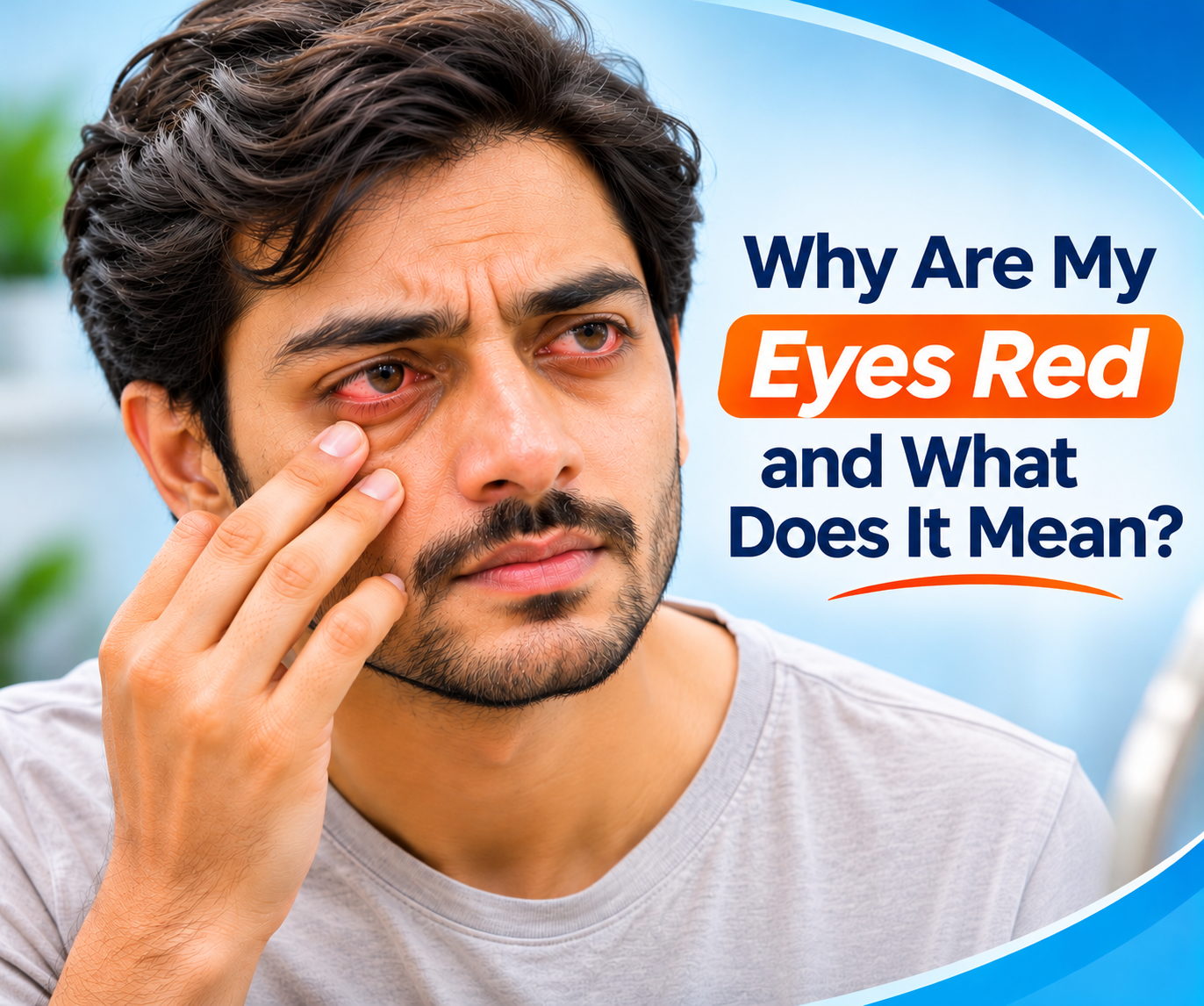
Have you ever looked in the mirror and noticed that the white part of your eyes has turned pink or red? It can happen after a long day at work, a night of poor sleep, or even after spending too much time looking at your phone. Sometimes, red eyes settle on their own. But if the redness keeps coming back, it may be a sign that your eyes need attention.
Red eyes are not always caused by tiredness. Dryness, allergies, infections and other eye conditions can also be responsible. Understanding the possible cause is the first step towards getting the right treatment.
What Causes Red Eyes?
Redness usually appears when the small blood vessels on the surface of the eye become enlarged or irritated. Some common reasons include:
1. Dry Eyes

Dry eye is one of the common reasons for red and irritated eyes. It happens when your eyes do not produce enough tears or when tears evaporate too quickly. You may also experience burning, itching, a gritty feeling or blurred vision. For example, if you work on a laptop for several hours without taking breaks, you may blink less often. This can make your eyes dry and uncomfortable
2. Eye Allergies

Dust, pollen, pollution, pet hair and other allergens can trigger eye allergies. The eyes may become red, watery and itchy. Some people also notice swollen eyelids. Rubbing your eyes may make the irritation worse, even if it feels relieving for a moment.
3. Eye Infection
Conjunctivitis, commonly called pink eye, can cause redness, watering, irritation and sticky discharge. It may affect one or both eyes. Some types of conjunctivitis are contagious, so avoid sharing towels and touching your eyes unnecessarily.
4. Too Much Screen Time

Long hours on mobile phones, laptops or television can contribute to eye strain and dryness. People often blink less while concentrating on a screen, which can disturb the tear film and make the eyes look red.
5. Contact Lens Irritation
Wearing contact lenses for too long, sleeping with them or not cleaning them properly can irritate the eyes. Redness in someone who wears contact lenses should never be ignored because an infection or corneal problem may be involved.
When Should You Worry About Red Eyes?
Occasional redness without pain or vision changes may be due to minor irritation. However, certain symptoms need urgent medical attention.
Consult an eye doctor promptly if you have:
- Severe eye pain or sudden redness
- Blurred vision or sudden loss of vision
- Sensitivity to light
- A red eye with significant discharge
- Redness after an eye injury
- A painful red eye while wearing contact lenses
Do not wait for the redness to disappear if you have these warning signs.
Can Dry Eyes Be the Reason for Persistent Redness?
Yes. When the tear film does not protect the eye’s surface properly, irritation and inflammation can occur. This may lead to recurring redness, burning and discomfort
If the symptoms continue, a doctor may recommend a Dry eye test in Gurugram to understand what is causing the problem. The examination may include checking tear production, tear stability, eyelids and the oil-producing glands.
The treatment depends on the findings. It may include lubricating eye drops, eyelid care, warm compresses or specialized dry eye procedures when appropriate.
How Can You Take Care of Red Eyes?
A few everyday habits may help reduce mild irritation:
- Take regular breaks during screen use.
- Blink consciously while working on a computer.
- Avoid rubbing your eyes.
- Keep contact lenses clean and follow the recommended wearing schedule.
- Protect your eyes from dust, smoke and strong wind.
- Use eye drops only on appropriate medical advice, especially if redness keeps returning.
Avoid using redness-relief drops repeatedly without consulting an eye specialist. They may hide the redness without treating its underlying cause.
Finding the Right Dry Eye Care in Gurugram
If you are searching for the BEST Dry Eyes hospital in Gurugram, look for a clinic that checks the actual cause of your symptoms rather than simply recommending eye drops.
At Barman Eye Care Centre, Dr. Keya Barman, MBBS, MS (Ophthalmology), Founder and Chief Ophthalmologist, provides comprehensive eye care, including evaluation and management of dry eye conditions. She has also completed a fellowship in Cataract and Refractive Surgery.
If you need the Best dry eye treatment in Gurugram, a proper examination can help identify whether dryness, allergies, infection or another condition is responsible for the redness.
Conclusion
Red eyes may be caused by something as simple as tiredness or dryness, but persistent redness can sometimes point to an underlying eye problem. Pay attention to other symptoms, avoid self-medication and get your eyes examined if the redness does not settle or keeps returning.
The right diagnosis helps your doctor recommend treatment based on what your eyes actually need.
Frequently Asked Questions
The right time to get cataract surgery is when cloudy vision starts interfering with your daily activities, such as reading, driving, watching television, or recognizing faces. Surgery is not always necessary immediately after a cataract is diagnosed. An eye specialist evaluates your vision, cataract progression, and overall eye health before recommending the procedure. You should not wait until your vision becomes extremely poor if cataracts are already affecting your quality of life.
You may need cataract surgery if you experience persistent blurred vision, difficulty seeing at night, increased sensitivity to light, glare from headlights, or frequent changes in your spectacle prescription. These symptoms can indicate that cataracts are affecting your vision. A comprehensive eye examination helps determine whether surgery is appropriate. The decision depends on how much your vision is affected, not just the size or stage of the cataract.
Yes, cataract surgery can be performed in the early stages if the condition significantly affects your daily activities or visual needs. However, not everyone with an early cataract needs immediate surgery. Your ophthalmologist will assess your symptoms, vision quality, and eye health before recommending treatment. Regular eye check-ups can help monitor cataract progression and identify the appropriate time for surgery.
Delaying cataract surgery may gradually affect your ability to read, drive, work, and perform everyday tasks. In some cases, an advanced cataract can become harder to operate on. However, the speed of progression varies from person to person. If your vision is worsening, schedule an eye examination rather than waiting for the cataract to become severe.
No, cataract surgery is not always necessary when your vision is still good and you can comfortably perform your daily activities. Your doctor may recommend monitoring the cataract through regular eye examinations. Surgery becomes a consideration when cataracts begin affecting your vision, independence, or quality of life. The decision should be based on your symptoms and clinical evaluation.
There is no fixed best age for cataract surgery. Cataracts commonly develop with ageing, but they can also occur earlier due to other factors. The right time depends on the severity of vision problems, the impact on daily activities, and your overall eye health. An ophthalmologist can assess your condition and recommend surgery when its benefits are likely to outweigh the risks.