

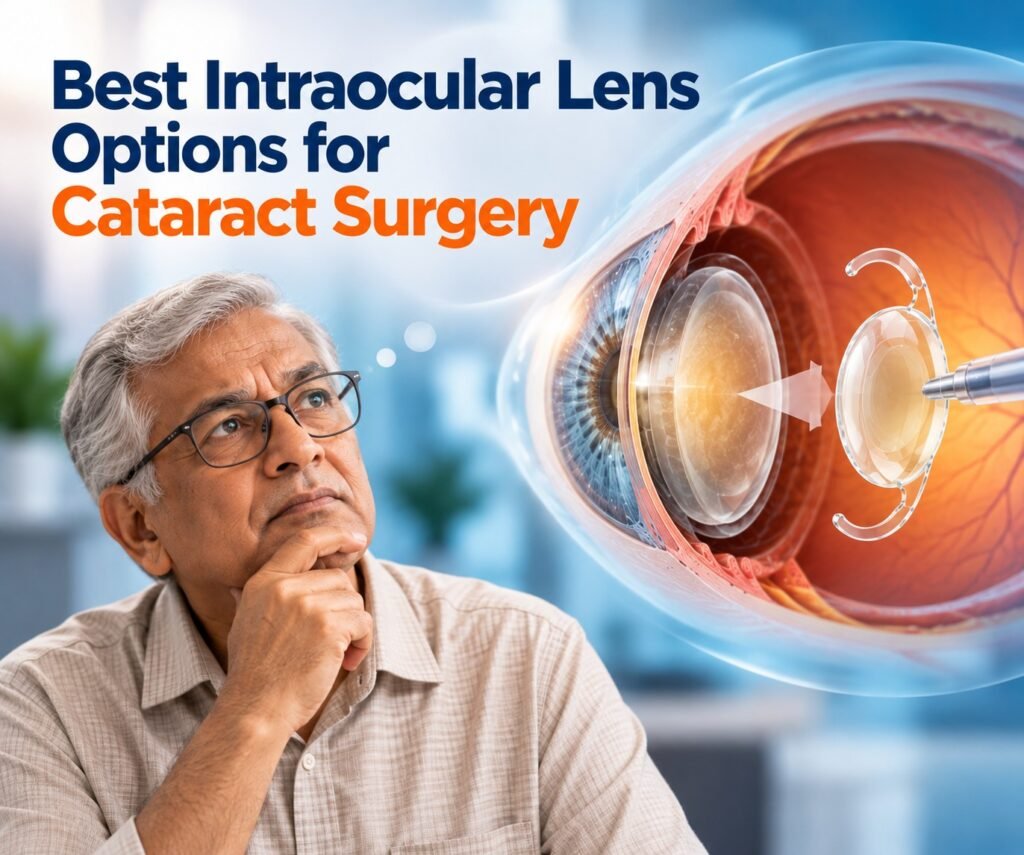
Dr. Keya Barman Explains How to Choose the Right IOL for Your Eyes
When most people think about cataract surgery, they think about removing the cloudy lens. What they don’t realize is that the lens you choose to replace it with the intraocular lens, or IOL is equally important. It’s a permanent decision that directly affects how clearly you see at different distances, how much you depend on glasses afterwards, and how comfortable your vision feels in daily life.
Dr. Keya Barman, Founder and Chief Ophthalmologist at Barman Eye Care Centre, Gurugram, holds an MS in Ophthalmology and a Fellowship in Cataract and Refractive Surgery. A member of the All India Ophthalmological Society with over two decades of surgical experience, she guides every cataract patient through this decision carefully because no two patients have the same eyes or the same lifestyle.
Why the IOL Choice Matters More Than Most People Think

The artificial lens placed in your eye during cataract surgery stays there for life. Unlike glasses or contact lenses, it cannot be changed easily once it’s in. The power of the lens is calculated from detailed measurements of your eye taken before surgery and the type of lens chosen determines whether you’ll still need glasses for reading, distance, or both after the procedure.
Getting this right is one of the most important parts of cataract surgery. And it starts with understanding what’s available.
The Main Types of Intraocular Lenses
Monofocal IOL:
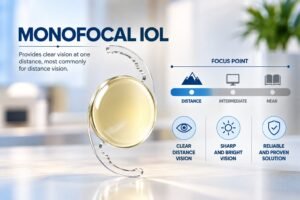
The most widely used lens worldwide. It corrects vision at one fixed distance usually distance giving clear sight for driving, watching television, and seeing across a room. Most patients with a monofocal lens will still need reading glasses for close tasks like reading and using their phone. Monofocal lenses are the most affordable option and have a long, well-established track record. For patients who don’t mind reading glasses after surgery, they are a perfectly reliable choice.
Toric IOL:
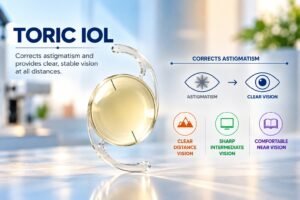
Designed for patients who have astigmatism an uneven corneal curvature alongside their cataract. A standard monofocal lens does not correct astigmatism. If left unaddressed, astigmatism means continuing to need glasses for both near and distance vision after surgery, even with a good lens power calculation. A toric IOL corrects the astigmatism during surgery, significantly reducing overall dependence on glasses. It costs more than a standard monofocal but delivers meaningfully better outcomes for patients with significant astigmatism.
Multifocal IOL:

Works across multiple distances near, intermediate, and far within a single lens. The goal is to reduce or eliminate glasses entirely after surgery. Many patients achieve exactly that and describe the freedom as life-changing. The trade-off is that some patients experience halos or glare around lights in the first few months as the brain adapts to the new lens. This usually settles over time. Multifocal lenses are not suitable for everyone patients with retinal conditions or significant corneal irregularities may not get the best results from this lens type.
EDOF IOL –
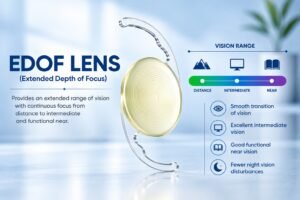
Extended Depth of Focus: A newer category of premium lens that provides a continuous, seamless range of vision from distance through to intermediate, with functional near vision. EDOF lenses tend to produce fewer halos and glare than traditional multifocal lenses, making them a popular choice for patients who drive frequently at night or work extensively on screens.
Trifocal IOL:
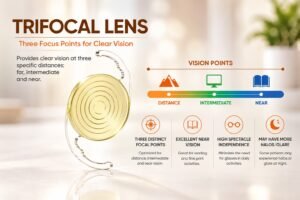
The most advanced option currently available. Trifocal lenses deliver sharp, clear vision at near, intermediate, and far distances simultaneously. For patients who want maximum visual freedom across all tasks reading, driving, using a computer, recognising faces trifocal IOLs offer the most comprehensive solution. They come at a higher cost, and like all premium lenses, their suitability depends on the health of your cornea, retina, and overall eye structure.
How Is the Right Lens Chosen?
The right IOL for you is never chosen based on price or popularity alone. Dr. Keya Barman’s pre-surgery evaluation process considers:
- Corneal measurements and topography
- The presence and degree of astigmatism
- Retinal health, particularly macular function
- Tear film quality, since dry eyes can affect premium lens performance
- Your daily lifestyle, how much you read, drive, use screens, or work outdoors
- How important it is to you to be glasses-free after surgery
Two patients with the same cataract and the same glasses prescription can walk away with completely different lens recommendations once all of these factors are considered. That individuality in the recommendation is what good cataract care looks like.
Choosing the Right Place for Cataract Surgery in Gurgaon
The IOL decision is only as good as the evaluation behind it. The Best cataract hospital in Gurugram will offer the full range of lens options, use advanced biometry for accurate power calculations, and take the time to explain each option clearly before asking you to decide.
The Best cataract surgeon in Gurgaon will recommend a lens based on your clinical profile and lifestyle not on what is most profitable or most convenient for the clinic. That honesty in recommendation is one of the clearest signs you are in the right hands.
For anyone searching for the best cataract hospital near me in Gurugram and the wider Delhi NCR region, Barman Eye Care Centre offers comprehensive cataract care from pre-surgery evaluation through to post-operative follow-up with the full range of IOL options and Dr. Keya Barman’s surgical precision guiding every step.
Conclusion
The intraocular lens is a permanent part of your eye after cataract surgery and choosing the right one makes a significant difference to your quality of life afterwards. Monofocal, toric, multifocal, EDOF, trifocal each has its place, and the right choice depends entirely on your eyes and your lifestyle. Get a thorough evaluation, ask the questions that matter, and make this decision with complete information. Your vision for the rest of your life is worth that care.
Frequently Asked Questions
The best intraocular lens (IOL) for cataract surgery depends on your eye health, lifestyle, visual needs, and budget. Monofocal lenses generally provide clear vision at one primary distance, while multifocal and trifocal lenses can help provide vision at multiple distances. Extended depth of focus (EDOF) lenses offer an extended range of vision, and toric lenses correct certain types of astigmatism. An ophthalmologist can evaluate your eyes and recommend a lens that suits your individual needs
Monofocal lenses are designed to provide clear vision at one main distance, so glasses may be needed for other distances. Multifocal lenses are designed to provide vision at multiple distances and may reduce dependence on glasses for some activities. However, multifocal lenses can cause glare, halos, or reduced contrast in some patients. The right choice depends on your visual expectations, eye health, and tolerance for potential side effects.
Premium lenses are not automatically better for every patient. They may offer additional benefits, such as a broader range of vision or correction of astigmatism, depending on the lens type. Standard monofocal lenses can provide excellent visual outcomes and may be more suitable for people who prioritise distance vision and are comfortable wearing glasses for near tasks. Your ophthalmologist should explain the benefits, limitations, and costs of each option.
An extended depth of focus (EDOF) lens is designed to provide a continuous range of vision, particularly from distance to intermediate tasks such as computer use. Near vision may still require reading glasses. EDOF lenses may suit people who want greater visual flexibility with less dependence on glasses, but results vary by lens design and individual eye health. A detailed eye examination can determine whether this option is appropriate.
A toric intraocular lens is designed to correct corneal astigmatism, an irregular curvature that can cause blurred or distorted vision. It may be recommended for cataract patients who have a suitable amount of astigmatism and want to improve unaided vision after surgery. Accurate measurements and proper lens alignment are important for achieving the intended result. Your surgeon can determine whether a toric lens is suitable for your eyes.
Choosing the right IOL involves evaluating your eye health, corneal measurements, retinal condition, astigmatism, daily activities, and expectations about wearing glasses. Your budget and comfort with possible visual side effects, such as glare or halos, should also be considered. Ask your ophthalmologist to explain the expected vision at different distances, the limitations of each lens, and the total treatment cost before deciding