


LASIK is one of the most commonly performed laser vision correction procedures for people who want to reduce their dependence on glasses or contact lenses. But before choosing it, one question naturally comes to mind:
Is LASIK eye surgery safe?
For many suitable candidates, LASIK has a strong safety record. However, it is not the right procedure for everyone. Your eye health, corneal thickness, prescription, dry-eye symptoms, and overall medical history all need to be checked before surgery.
What Does LASIK Eye Surgery Do?
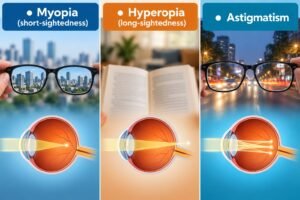
LASIK uses a laser to permanently reshape the cornea, which is the clear front surface of the eye. By changing its shape, the procedure helps light focus more accurately on the retina.
LASIK is mainly used to correct common refractive errors such as:
- Myopia (short-sightedness)
- Hyperopia (long-sightedness)
- Astigmatism
The procedure itself is usually short, but the important part happens before surgery making sure your eyes are suitable for LASIK.
Dr. Keya Barman Explains: Who Is a Good Candidate for LASIK?
Dr. Keya Barman, Founder & Chief Ophthalmologist at Barman Eye Care Centre, has a strong background in cataract, refractive, and comprehensive eye care.
She completed her MBBS from M. P. Shah Medical College, Jamnagar, in 2003, followed by MS in Ophthalmology from the same institution in 2005. She has also completed a Fellowship in Cataract & Refractive Surgery and is a member of the All India Ophthalmological Society (AIOS).
According to the doctor, LASIK candidacy cannot be decided simply by looking at a person’s glasses number. A detailed eye examination is needed first.
People with an unstable prescription, certain corneal conditions, significant dry eye, or medical conditions that may affect healing may not be suitable for LASIK. Age and general eye health also matter.
What Tests Are Done Before LASIK?
A proper pre-LASIK evaluation may include checking your vision, corneal shape and thickness, eye pressure, tear-film health, and the overall condition of your eyes.
These tests help the ophthalmologist understand whether laser vision correction is appropriate and which treatment option may be suitable.
This is also why choosing a surgeon should not be based only on the Lasik surgery cost in Gurugram. The experience of the surgeon, quality of evaluation, technology used, and follow-up care are important parts of the decision.
Are There Any Risks With LASIK?
Like every surgical procedure, LASIK has possible risks and side effects. Some patients may experience temporary dry eyes, glare, halos, blurred vision, or fluctuations in vision after surgery.
Most patients are satisfied with their results, but LASIK does not guarantee perfect vision or that you will never need glasses again. Your ophthalmologist should explain the expected benefits, limitations, and possible risks before you decide.
How Do You Choose a LASIK Clinic?
If you are searching for the Best LASIK surgery near me, don’t make the decision only by comparing prices or advertisements.
Look for an eye center where you can get a detailed examination, clear answers to your questions, appropriate technology, and proper post-operative follow-up.
Similarly, when searching for the Best LASIK hospital near me, consider the doctor’s qualifications and experience along with the facilities available at the center.
Conclusion
So, is LASIK eye surgery safe? For carefully selected patients, it is generally considered a well-established procedure. But safety starts with proper patient selection and a thorough eye examination.
Dr. Keya Barman and the team at Barman Eye Care Centre can evaluate your eyes and discuss whether LASIK or another vision-correction option is appropriate for you.
The right decision should always be based on your individual eye health rather than cost or convenience alone.
Frequently Asked Questions
LASIK is generally considered a safe and well-established procedure for correcting common refractive errors such as myopia, hyperopia, and astigmatism. However, like any surgical procedure, it has potential risks and side effects. Some patients may experience temporary dryness, glare, halos, or fluctuations in vision during recovery. A detailed pre-operative eye examination is important to determine whether you are a suitable candidate. Your ophthalmologist can explain the expected benefits, risks, and recovery process based on your individual eye health.
Most patients recover without serious complications, but LASIK can have potential side effects. These may include dry eyes, glare, halos, light sensitivity, temporary blurred vision, or difficulty with night vision. Rarely, more significant complications can occur. The likelihood of complications depends on factors such as corneal thickness, eye health, prescription, and healing response. A thorough screening before surgery helps identify factors that could increase risk.
LASIK has a high rate of achieving significant improvement in uncorrected vision, but results vary between individuals. The outcome can depend on the patient's prescription, corneal characteristics, age, eye health, and the technology and technique used. Some patients may still need glasses for specific activities after surgery. Your surgeon should discuss your expected visual outcome during the pre-operative evaluation rather than guaranteeing a particular result.
LASIK may not be suitable for everyone. People with certain corneal conditions, unstable prescriptions, severe dry eye, some eye diseases, or particular medical conditions may require alternative treatment or additional evaluation. Pregnancy and breastfeeding can also temporarily affect vision and may influence the timing of surgery. A comprehensive examination by an ophthalmologist is necessary to determine whether LASIK is appropriate for you
Serious permanent complications from LASIK are uncommon, but they can occur. Possible long-term issues may include persistent dry-eye symptoms, visual disturbances, or problems related to the cornea in rare cases. Proper patient selection, accurate pre-operative measurements, appropriate surgical technique, and follow-up care are important for reducing risks. If you experience persistent pain, significant vision loss, or unusual symptoms after LASIK, contact your eye surgeon promptly.
LASIK may be possible for some people with higher prescriptions, but suitability depends on more than the power number. The surgeon needs to assess corneal thickness, corneal shape, eye health, tear-film condition, and the amount of correction required. If LASIK is not suitable, other vision-correction procedures may sometimes be considered. A detailed screening is therefore essential before deciding whether LASIK is appropriate for a high prescription.