



Dr. Keya Barman Explains the Science Behind Cataract Formation
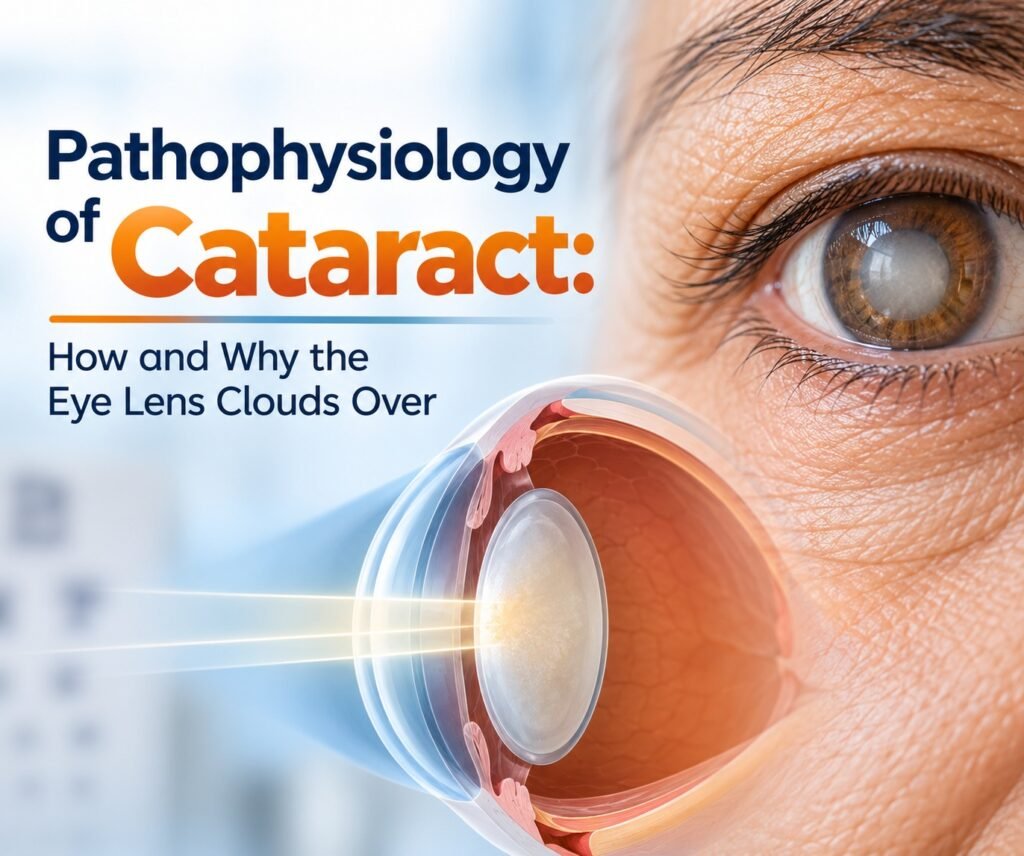
Most people know what a cataract does it makes your vision blurry. But very few understand what is actually happening inside the eye when a cataract forms. Understanding the pathophysiology of cataract the biological process behind lens clouding helps explain why it develops, why it progresses, and why surgery remains the only effective treatment.

Dr. Keya Barman, Founder and Chief Ophthalmologist at Barman Eye Care Centre, Gurugram, has an MS in Ophthalmology and a Fellowship in Cataract and Refractive Surgery. With over two decades of surgical experience and membership in the All India Ophthalmological Society, she breaks down this process in a way that actually makes sense.
What Is the Normal Lens and How Does It Work?
The crystalline lens of the human eye sits just behind the pupil and iris. In a healthy eye, it is transparent, flexible, and avascular meaning it has no direct blood supply. It depends entirely on the aqueous humour, the fluid surrounding it, for its nutrition and waste removal.
The lens is made up of:
- Lens capsule: the outermost transparent membrane enclosing the lens
- Lens epithelium: a single layer of cells beneath the anterior capsule responsible for metabolic activity
- Lens fibres: tightly packed, elongated cells that make up the bulk of the lens
The transparency of the lens depends on the highly organised arrangement of these lens fibres and the precise balance of proteins primarily crystallins within them. Any disruption to this organisation or protein balance leads to light scattering instead of clear transmission, which is what we see as a cataract
The Pathophysiology of Cataract: Step by Step
Step 1: Oxidative Stress Begins

The lens is constantly exposed to ultraviolet radiation, metabolic byproducts, and environmental stressors. Under normal conditions, antioxidant systems including glutathione, vitamin C, and superoxide dismutase, neutralise these threats and maintain lens clarity. With age, disease, or external triggers, these antioxidant defences weaken. Oxidative stress builds up, damaging the proteins and cell membranes within the lens.
Step 2: Protein Aggregation and Crystallin Damage

The primary proteins in the lens are alpha, beta, and gamma crystallins. These proteins are remarkably stable, the same crystallins present in childhood remain in the lens for life, as the lens has no mechanism to replace its core proteins.
When oxidative stress disrupts these proteins, they unfold, aggregate, and clump together. These protein aggregates are too large to allow normal light transmission. Instead of passing cleanly through, light scatters, producing the haziness, glare, and blurring characteristic of a developing cataract.
Step 3: Loss of Lens Membrane Integrity

The lens epithelial cells are responsible for maintaining ion balance within the lens particularly regulating sodium, potassium, and calcium levels through active pump mechanisms. When these cells are damaged by oxidative stress or disease, the ion balance breaks down.
Excess calcium and sodium enter the lens fibres. Water follows through osmosis, causing the lens to swell and further disrupting the precise arrangement of lens fibres. This swelling accelerates cloudiness and contributes to the hardening of the lens nucleus seen in nuclear cataracts.
Step 4: Lens Fibre Breakdown

As damage progresses, the organized structure of lens fibers breaks down. The normally tightly packed, transparent fibres lose their organization and begin to degenerate. The nucleus of the lens its central core hardens and takes on a yellowish or brownish colour as pigments accumulate. This is the hallmark of the most common cataract type: nuclear sclerotic cataract.
Why Different Cataracts Form in Different Locations
The pathophysiology explains why different types of cataracts develop in different parts of the lens:
Nuclear Cataract forms at the centre of the lens where protein aggregation and hardening are most pronounced with age. It develops slowly and often shifts the refractive index of the lens, temporarily improving near vision before worsening significantly.
Cortical Cataract develops in the outer cortex of the lens, where water clefts and vacuoles form due to disrupted ion transport. It progresses in a characteristic spoke-like pattern inward from the lens periphery.
Posterior Subcapsular Cataract (PSC) forms at the back of the lens just beneath the capsule. It is associated with steroid use, diabetes, and radiation exposure. Because of its central posterior location, it affects vision especially reading and bright-light vision earlier and more severely than its size would suggest.
Anterior Subcapsular Cataract develops at the front of the lens and is often linked to trauma or inflammatory conditions.
What Accelerates the Pathophysiology?
Several factors accelerate the biological process of cataract formation:
Diabetes mellitus: Elevated blood glucose leads to increased sorbitol accumulation in the lens through the polyol pathway, drawing in water and accelerating lens fibre disruption. Diabetic cataracts can develop decades earlier than age-related ones.
Ultraviolet radiation: UVB light directly damages lens proteins and depletes antioxidant defences, accelerating oxidative stress.
Corticosteroid use: Long-term steroid exposure oral, inhaled, or topical, is strongly linked to posterior subcapsular cataract formation. The exact mechanism involves disruption of lens epithelial cells and protein metabolism.
Smoking: Increases oxidative load in the lens, depletes glutathione, and significantly accelerates protein aggregation.
Nutritional deficiency: Low levels of antioxidants including vitamins C and E, and carotenoids like lutein and zeaxanthin, reduce the lens’s ability to defend against oxidative damage.
Trauma: Direct injury disrupts the lens capsule and triggers rapid cataract formation as aqueous humour enters the normally isolated lens environment.
When Should You Get Evaluated?
Understanding the pathophysiology of cataract makes one thing clear, the process begins long before symptoms become obvious. By the time significant blurring, glare, or colour dullness appears, meaningful lens changes have already occurred.
This is why regular eye examinations matter, especially after the age of 40, or earlier if you have diabetes, are on long-term steroids, or have significant UV exposure history.
At the best eye clinic in Gurugram Barman Eye Care Centre, Dr. Keya Barman provides comprehensive cataract evaluations using advanced imaging and biometry to assess exactly what stage of lens change you are at and whether surgical intervention is needed.
Conclusion
The best eye center in Gurugram for cataract care offers detailed retinal assessments alongside lens evaluation, because cataract formation particularly in high myopia and diabetes is often associated with concurrent retinal changes that must be identified before surgery is planned.
As the best eye care centre in Gurugram for comprehensive ophthalmology, Barman Eye Care Centre combines Dr. Barman’s surgical expertise with advanced diagnostic technology to give patients a complete, honest picture of their eye health from first consultation through to post-operative recovery.
Frequently Asked Questions
The natural lens inside the eye can gradually become cloudy due to changes in its proteins and structure. This condition is known as a cataract. Ageing is the most common cause, but cataracts can also develop due to diabetes, previous eye injuries, prolonged use of certain medications, or other eye conditions. As the lens becomes less transparent, light cannot pass through it properly, which can cause blurry or hazy vision. Cataracts usually develop gradually, so many people may not notice the changes initially. Regular eye examinations can help detect cataracts at an early stage.
Age-related changes are the most common cause of cataracts. As we get older, proteins within the natural eye lens can break down and clump together, gradually reducing its transparency. Other factors such as diabetes, smoking, excessive ultraviolet exposure, eye trauma, and certain medications can also increase the risk. Cataracts are not simply caused by “overusing” the eyes. An eye examination can help identify whether a cloudy lens is affecting your vision.
A cataract generally does not become clear again naturally once significant clouding has developed. There are currently no eye drops or medicines that can reliably reverse an established cataract. In the early stages, updated glasses and better lighting may help manage vision changes. When a cataract begins interfering with reading, driving, work, or daily activities, cataract surgery may be recommended. During surgery, the cloudy natural lens is removed and replaced with an artificial intraocular lens.
Early cataract symptoms may include blurred or hazy vision, increased sensitivity to bright lights, glare around headlights, difficulty seeing at night, faded colours, and frequent changes in glasses prescription. Some people may also notice double vision in one eye. Cataracts usually develop slowly, so symptoms can initially be subtle. If you notice persistent changes in your vision, an eye examination can determine whether cataracts or another eye condition is responsible.
Yes, diabetes can increase the risk of developing cataracts. Persistently elevated blood sugar can affect the eye's natural lens and contribute to changes in its transparency. People with diabetes may develop cataracts at a younger age or experience faster progression in some cases. Maintaining good blood sugar control and having regular comprehensive eye examinations are important for protecting overall eye health.
Cataract surgery is generally considered when the cataract begins to interfere with your everyday activities or quality of life. There is no universal rule that a cataract must reach a particular stage before surgery. Your ophthalmologist will evaluate your vision, eye health, lifestyle, and symptoms before recommending treatment. Modern cataract surgery removes the cloudy natural lens and replaces it with an artificial intraocular lens selected according to your visual needs.