

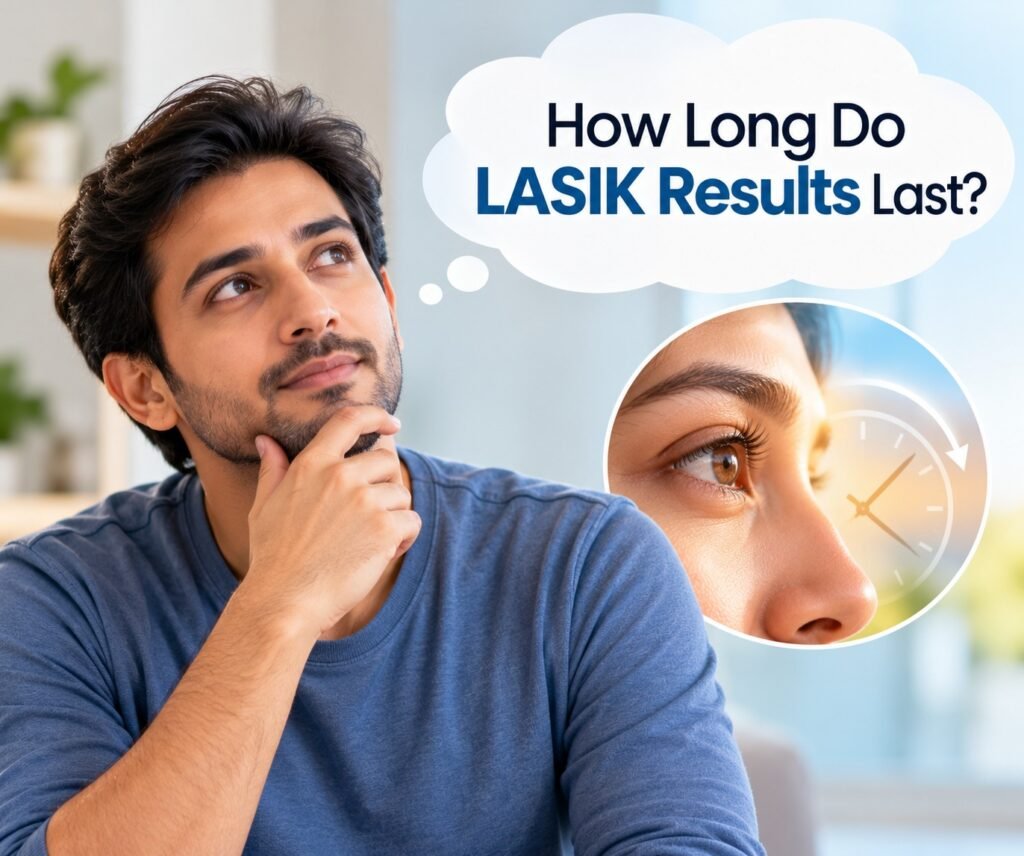
Imagine waking up in the morning and reaching for your glasses out of habit. Then you suddenly remember that you had LASIK and don’t need them to see the clock.
For many people, this is one of the biggest reasons they consider LASIK. But there is another question that often comes up before surgery: How long do LASIK results last?
In most suitable patients, LASIK can provide long-lasting vision correction. However, it is important to understand that LASIK does not stop the eyes from changing naturally as we get older.
How Long Can You Expect LASIK Results to Last?
LASIK permanently changes the shape of the cornea to correct the existing refractive error. Because the corneal tissue that is reshaped does not simply return to its original form, the correction can last for many years.
For example, someone who has LASIK at 25 and has a stable prescription may continue to have good distance vision for many years.
But everyone’s eyes are different. Some people may experience changes in their prescription over time. This does not always mean that the LASIK procedure has “worn off.”
Can Your Eyesight Change After LASIK?

Yes. Your eyes can naturally change even after successful LASIK.
One common example is presbyopia. As we get older, the natural lens inside the eye gradually becomes less flexible. This can make it harder to focus on nearby objects.
So, a person who had excellent distance vision after LASIK may eventually need reading glasses. For instance, you may be able to drive without glasses but still need reading glasses to read a restaurant menu or a message on your phone. This is a normal age-related change and is not necessarily a sign that LASIK has failed.
What About Your Original Eye Power Coming Back?
In some cases, a person’s prescription can change after LASIK. This is sometimes called regression.
The chance of this happening depends on several factors, including the original prescription, age, eye health, and individual healing.
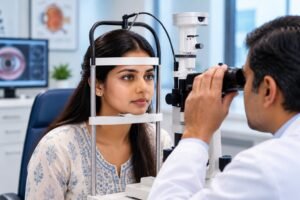
This is why having a stable eye power before surgery is important. A detailed eye examination helps the ophthalmologist decide whether LASIK is suitable for you.
Dr. Keya Barman Explains: Why Proper Evaluation Matters
Dr. Keya Barman, Founder & Chief Ophthalmologist at Barman Eye Care Centre, has expertise in refractive surgery, cataract surgery, and comprehensive eye care.
She completed her MBBS from M. P. Shah Medical College, Jamnagar, in 2003, followed by MS in Ophthalmology in 2005. She has also completed a Fellowship in Cataract & Refractive Surgery and is a member of the All India Ophthalmological Society (AIOS).
Before LASIK, the doctor checks several things, including your eye power, corneal shape and thickness, tear-film health, and overall eye condition.
This evaluation is important because LASIK is not suitable for everyone.
Can LASIK Give You Perfect Vision Forever?

It is better not to think of LASIK as a guarantee of perfect vision forever.
The goal is to reduce dependence on glasses or contact lenses. Many suitable patients achieve very good distance vision, but results can vary from person to person.
For example, one person may rarely need glasses after LASIK, while another may need glasses for certain activities later in life.
If you are considering the Best LASIK surgeon in Gurugram, ask questions about your expected results, possible risks, and what may happen to your vision as you age.
Is LASIK Surgery Worth Considering?
For someone who is tired of wearing glasses or contact lenses, LASIK can be an option worth discussing with an ophthalmologist.
However, choosing best Lasik surgery in Gurugram should not be based only on advertisements or price. Your suitability for the procedure, the surgeon’s experience, proper pre-surgery testing, and follow-up care are all important.
Conclusion
LASIK results can last for many years, but your eyes can still change naturally with age. Good distance vision after LASIK does not mean your eyesight will never change again.
The best approach is to have a detailed eye examination and understand what results you can realistically expect.
At Barman Eye Care Centre, Dr. Keya Barman can evaluate your eyes and discuss whether LASIK or another vision-correction option is suitable for your individual needs.
Frequently Asked Questions
LASIK results can last for many years, and vision correction is generally long-lasting. The procedure permanently reshapes the cornea to correct refractive errors such as nearsightedness, farsightedness, and astigmatism. However, natural ageing and other changes in the eyes can affect vision over time. Some people may experience a change in their prescription years after surgery. Regular eye examinations help monitor vision and identify any changes that may require further treatment.
Yes, eyesight can change after LASIK in some people. This may happen because of natural changes in the eye, regression of the original refractive error, or certain eye conditions. Some patients may notice a small prescription returning over time. However, this does not necessarily mean LASIK has failed. An ophthalmologist can assess the cause of the change and recommend whether glasses, contact lenses, or further treatment may be appropriate.
LASIK permanently changes the shape of the cornea, but it cannot stop the natural ageing process. Many patients enjoy clear distance vision for decades after surgery. However, age-related presbyopia, which makes close-up focusing more difficult, commonly develops after age 40. Other changes in eye health can also affect vision. Therefore, LASIK results can be long-lasting, but perfect vision at every distance for life cannot be guaranteed.
Yes, some people may need glasses after LASIK. Reading glasses may become necessary with age because of presbyopia, even if distance vision remains clear. Others may develop a small residual or changing prescription over time. Some people may also need glasses for specific activities, such as night driving. Regular eye check-ups can help determine whether glasses or another treatment would improve your vision.
A second procedure, known as a LASIK enhancement, may be possible for selected patients whose prescription changes after surgery. Before recommending it, the ophthalmologist must evaluate corneal thickness, corneal shape, eye health, and prescription stability. Not everyone is suitable for repeat LASIK, and additional treatment may carry risks. Glasses, contact lenses, or other vision-correction options may be more appropriate in some cases.
The longevity of LASIK results can depend on your original prescription, age, corneal characteristics, eye health, and individual healing response. People with higher prescriptions may have a greater likelihood of refractive regression. Natural ageing can also affect near vision, while certain eye conditions may cause later visual changes. A thorough pre-operative assessment and regular post-operative eye examinations help support long-term eye health and identify changes early.