

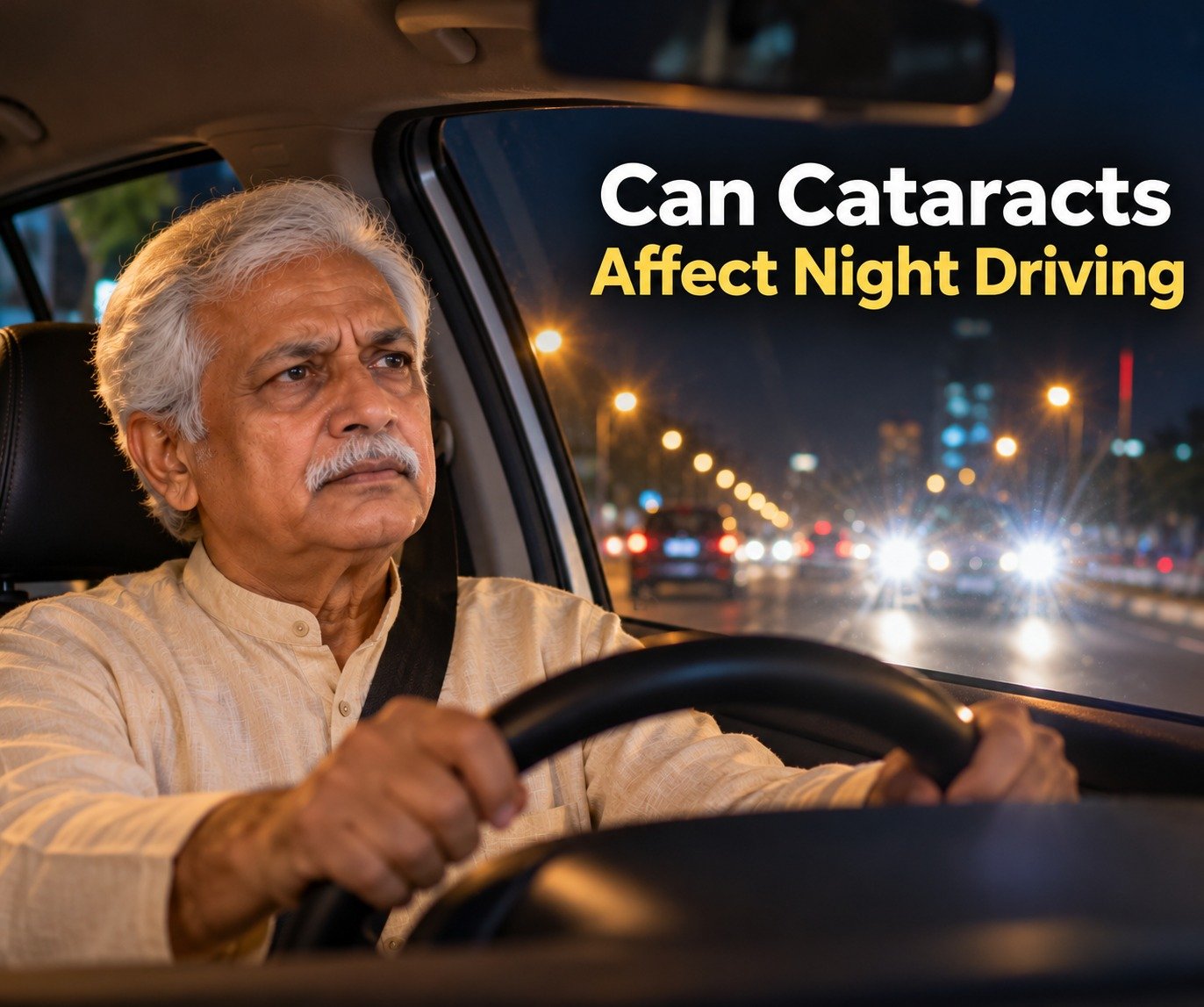
Have you ever felt uncomfortable driving at night because the headlights of oncoming cars seem too bright? Or perhaps road signs look blurry, even when you are familiar with the route. These problems can happen for several reasons, but cataracts may be one of them.
Cataracts develop when the natural lens inside the eye becomes cloudy. This can make everyday activities harder, especially driving after sunset. The good news is that cataracts can often be treated with surgery when they begin to affect daily life.
Why Can Cataracts Make Night Driving Difficult?
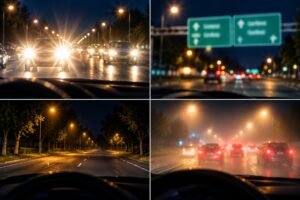
When the eye’s natural lens becomes cloudy, light cannot pass through it as clearly as before. This can affect how well you see in low-light conditions. Here are some common problems you may notice while driving at night:
1. Headlights May Look Too Bright
Bright headlights from oncoming vehicles may cause glare. You might find yourself looking away from the road or slowing down because the light feels uncomfortable.
2. Road Signs May Look Blurry
You may have difficulty reading road signs from a distance, particularly on roads with poor lighting. Even a familiar journey can become stressful when you cannot see signs clearly.
3. It May Be Harder to See in Dim Light
Cataracts can reduce contrast, making it difficult to distinguish objects from their surroundings. For example, a pedestrian wearing dark clothes may be harder to notice on a poorly lit road.
4. Your Vision May Seem Hazy
Some people describe their vision as looking foggy or as if they are looking through a dusty window. This can make judging distances and spotting obstacles more difficult.
If these symptoms are affecting your driving, it is sensible to arrange an eye examination rather than simply avoiding night-time journeys without finding the cause.
When Should You See an Eye Doctor?
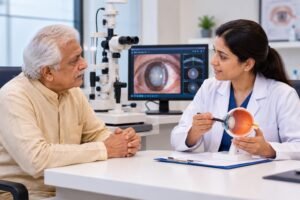
Do not ignore changes in your vision, particularly if they are getting worse. An eye specialist can check whether cataracts are responsible or whether another condition is affecting your sight.
People searching for the Best cataract hospital in Gurugram should look for a centre that offers a detailed eye examination, appropriate diagnostic facilities, clear treatment advice, and follow-up care.
Until your vision has been assessed, avoid driving at night if glare or blurred vision makes it difficult to drive safely. Updating your glasses may help some vision problems but it will not remove a cataract.
Can Cataract Surgery Improve Night Driving?
Cataract surgery involves removing the cloudy natural lens and replacing it with an artificial intraocular lens. For many suitable patients, this can improve vision and make daily activities easier.
For example, someone who once struggled with headlight glare may notice clearer vision after surgery. However, the results depend on the condition of the eyes and whether other problems, such as glaucoma or retinal disease, are present. Some people may still experience glare or halos after surgery.
If you are considering treatment, choosing the Best cataract surgeon in Gurgaon means looking beyond online ratings. Check the surgeon’s qualifications, cataract surgery experience, explanation of lens options, and approach to aftercare.
Why Choose the Right Eye Clinic for Cataract Care?
A proper assessment helps the doctor understand how much the cataract affects your vision and whether surgery is appropriate. At Barman Eye Care Centre,
Dr. Keya Barman, MBBS, MS in Ophthalmology, and Fellowship-trained in Cataract and Refractive Surgery, provides cataract and comprehensive eye care. If you are looking for the best eye clinic in Gurgaon for Cataract Surgery, arrange a consultation to discuss your symptoms, eye health, and suitable treatment options.
Conclusion
Yes, cataracts can affect night driving by causing glare, blurry vision, and difficulty seeing in dim light. These changes can make driving stressful and less safe. An eye examination can help identify the cause and determine whether cataract surgery may help.
Clear vision matters on every journey. If night driving has become difficult, do not wait for the problem to get worse before getting your eyes checked.
Frequently Asked Questions
Yes, cataracts can make night driving difficult by causing blurred vision, glare, and increased sensitivity to headlights. As the natural lens becomes cloudy, light scatters instead of passing clearly through the eye. This can make oncoming headlights, streetlights, and traffic signals appear brighter or surrounded by halos. It may also become harder to recognise road signs and pedestrians in low-light conditions. If night driving becomes uncomfortable or unsafe, consult an ophthalmologist for a comprehensive eye examination.
Headlights may appear unusually bright because cataracts scatter incoming light inside the eye. This scattering can create glare, halos, or starburst patterns around bright light sources. The effect is often more noticeable while driving at night or in poorly lit areas. Cataract-related glare can interfere with your ability to see the road clearly, so an eye examination is recommended if these symptoms persist.
Early signs include increased glare from headlights, halos around streetlights, blurred distance vision, reduced contrast, faded colours, and difficulty seeing clearly in dim lighting. Some people also notice that their glasses prescription changes frequently. These symptoms can develop gradually, making them easy to overlook. A comprehensive eye examination can help identify cataracts and determine whether treatment is needed.
Yes, cataract surgery can improve night vision when cloudy lenses are the main cause of visual difficulties. During the procedure, the cloudy natural lens is removed and replaced with an artificial intraocular lens (IOL). Many patients experience improved clarity, contrast, and reduced cataract-related glare. However, some people may continue experiencing glare or halos due to other eye conditions or the type of lens implanted. Individual results vary.
You should avoid night driving if cataract-related glare, blurred vision, or poor visibility makes it difficult to recognise road signs, pedestrians, vehicles, or traffic signals safely. Do not wait until your vision becomes severely impaired to seek medical advice. An ophthalmologist can assess your vision and explain whether cataract treatment is appropriate. Always follow applicable driving vision requirements.
No, not everyone with cataracts experiences the same night vision problems. Symptoms depend on the cataract's location, density, progression, and individual eye health. Some people mainly experience glare and halos, while others notice blurred vision or reduced contrast in dim lighting. Cataracts can affect one or both eyes differently. Regular eye examinations help monitor their progression and determine the appropriate time for treatment.