


LASIK has changed millions of lives. People who spent decades reaching for their glasses every morning suddenly wake up and simply see. But like any surgical procedure, it comes with side effects some expected, some less common, and a few that are rare but worth knowing about.
The goal here isn’t to scare you. It’s to make sure you go in fully informed, so nothing catches you off guard during recovery.
The Side Effects That Almost Everyone Experiences
These are normal parts of the healing process. They don’t mean something has gone wrong they mean your eyes are adjusting to a new corneal shape.Dry Eyes This is the most common side effect after LASIK, and almost every patient experiences some degree of it. During the procedure, corneal nerves that signal tear production are temporarily affected. As a result, your eyes produce fewer tears in the weeks following surgery.
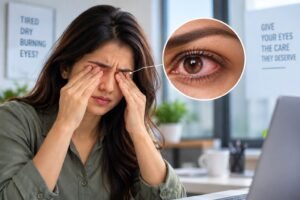
Symptoms include a scratchy, gritty, or burning feeling especially toward the end of the day or after screen use. For most people this settles down within three to six months as the nerves regenerate. Lubricating eye drops prescribed by your doctor help manage it comfortably through this period.People who already had mild dry eyes before surgery tend to experience it more noticeably after. This is exactly why a proper pre-surgery tear film assessment matters so much.
Halos and Glare at Night In the weeks after LASIK, many patients notice rings of light around headlights, streetlamps, or bright screens at night. This happens because the healing cornea scatters light slightly differently than before.

For the vast majority of patients, this improves significantly within one to three months as the corneal surface stabilizes. In a small number of cases particularly those with larger pupils or very high prescriptions some degree of night glare may persist longer.
Light Sensitivity Your eyes may feel more sensitive to bright light in the first few days after surgery. Wearing sunglasses outdoors during this period helps considerably. This typically resolves within the first week.

Blurry or Fluctuating Vision Vision doesn’t always become perfectly sharp immediately. In the first few days to weeks, it may feel slightly hazy or vary at different times of day. This is the eye settling and is a normal part of the healing curve not a sign that the surgery didn’t work.
Less Common Side Effects
These don’t happen to everyone but are worth being aware of. Under or Over-Correction Sometimes the laser corrects slightly more or less than intended. This can result in a remaining prescription that needs glasses for certain tasks. In most cases this is manageable, and an enhancement procedure can be considered once the eye has fully healed usually after three to six months. Regression In some patients, particularly those with higher prescriptions, vision may gradually shift back toward the original prescription over time. This doesn’t mean the surgery failed it means the cornea has changed slightly. Enhancement surgery can address this if it significantly affects vision. Flap-Related Issues Because LASIK involves creating a corneal flap, there is a small possibility of flap-related complications such as the flap shifting, wrinkling, or an ingrowth of cells underneath. These are rare, especially with modern femtosecond laser technology, and are usually identified and addressed quickly at follow-up appointments.
Rare but Serious Complications
Genuinely serious complications from LASIK are uncommon, but they exist. Corneal ectasia a progressive thinning and bulging of the cornea is the most concerning. It is rare and almost always linked to inadequate pre-surgery screening, particularly in patients with thin or irregular corneas who should not have had LASIK in the first place. This is the strongest argument for thorough pre-operative evaluation. The procedure itself is not the risk. Who gets selected for it is.
How to Minimized Your Risk
Most LASIK side effects are manageable, temporary, or preventable with the right preparation:
- Choose a clinic that performs detailed pre-surgery screening not a quick consultation
- Be completely honest about your dry eye history, medications, and lifestyle
- Follow post-operative instructions precisely use prescribed drops, wear protection, avoid water
- Attend every follow-up appointment, even when your vision feels fine
- Don’t rub your eyes during the healing period
Choosing the Right Team in Gurgaon
The side effects you experience after LASIK and how well you recover from them are directly influenced by where you get the procedure done and who performs it. The best hospital for LASIK eye surgery in Gurugram will have the diagnostic technology to screen you properly before surgery and the post-operative care system to support you through recovery. A missed dry eye issue in screening, or poor follow-up care after surgery, is often what turns a temporary side effect into a longer-term problem.
The best eye doctors and specialists in Gurgaon will walk you through your specific risk profile based on your corneal scans and tear film results so you’re not going in blind about what to expect. That kind of personalized, honest guidance before surgery is worth more than any discount or promotional package.
Conclusion
LASIK side effects are real, but they are mostly temporary and manageable for the right candidate. Dry eyes, glare, and fluctuating vision in the first few weeks are normal parts of healing. Serious complications are rare and almost always preventable with proper screening. Know what to expect, choose the right team, and follow your recovery plan that combination gives you the best possible chance of the outcome you’re hoping for.
Frequently Asked Questions
or most people, the results of LASIK eye surgery remain stable even 10 years after the procedure. Many patients continue to enjoy clear vision without glasses or contact lenses. However, your eyes can naturally change with age, regardless of whether you have had LASIK. For example, people over 40 may develop presbyopia, making it difficult to read small print and potentially requiring reading glasses. Some people may also experience a small change in their vision prescription over time.
LASIK does not stop age-related eye conditions such as cataracts, glaucoma, or other vision changes. For example, a person who had excellent distance vision after LASIK at age 30 may need reading glasses in their 40s due to normal ageing.
No, LASIK eye surgery is not 100% risk-free, because no surgical procedure can guarantee zero complications. However, LASIK is generally considered a safe and effective vision correction procedure when performed on a suitable candidate after a detailed eye examination.
Modern LASIK technology allows surgeons to evaluate corneal thickness, eye shape, prescription stability, and overall eye health before recommending surgery. This screening helps reduce potential risks.
Some patients may experience temporary side effects such as dry eyes, glare, halos around lights, or fluctuating vision, particularly during the healing period. Serious complications are uncommon, but they can occur.
For example, a person with severe dry eyes or a very thin cornea may not be an ideal candidate for LASIK. In such cases, another vision correction procedure may be safer.
LASIK is generally not considered a high-risk surgery for suitable candidates. It is a minimally invasive laser vision correction procedure with a relatively quick recovery period. However, like every medical procedure, LASIK has potential risks and side effects.
The level of risk depends largely on the patient's eye health and whether they are a suitable candidate. People with unstable prescriptions, very thin corneas, severe dry eyes, or certain eye conditions may have a higher risk of complications.
Possible side effects include temporary dry eyes, glare, halos, sensitivity to light, and vision fluctuations. For example, some patients may notice halos while driving at night during the initial recovery period, which often improves with healing.
Most people do not experience serious problems years after LASIK, and many continue to have clear vision for a long time. However, LASIK cannot prevent natural changes that occur in the eyes as you age.
For example, after the age of 40, many people develop presbyopia, which can make reading small text difficult. This can happen whether or not someone has undergone LASIK. Similarly, cataracts may develop later in life due to ageing.
In some cases, a person's prescription may gradually change after LASIK, and an enhancement procedure or glasses may be required. Rare long-term concerns can include persistent dry eyes or changes in night vision.
It is important to understand that LASIK changes the shape of the cornea but does not stop the natural ageing process of the eye.
The best way to reduce long-term risks is proper LASIK screening, choosing an experienced eye surgeon, and attending regular eye check-ups after surgery.
LASIK is often considered a long-lasting vision correction procedure, but it is not necessarily a once-in-a-lifetime procedure for every patient. Many people achieve stable vision after one LASIK procedure and never require additional laser treatment.
However, your eyes can change over time. In some cases, a person's prescription may return or change years after LASIK. If the cornea has enough healthy tissue and the eyes meet the required safety criteria, a surgeon may recommend a LASIK enhancement.
For example, a patient who undergoes LASIK in their 20s may experience a small prescription change several years later. Depending on their eye health, an enhancement may be possible.
It is also important to remember that LASIK does not prevent age-related vision changes. Many people develop presbyopia after age 40 and may eventually need reading glasses.
In short: One LASIK procedure is sufficient for many patients, but some may require additional vision correction depending on future changes in their eyes.
LASIK does not have a single fixed “failure rate” because results depend on factors such as the patient's prescription, corneal health, technology used, and individual healing response. For most suitable candidates, LASIK provides significant improvement in vision and high patient satisfaction.
A less-than-perfect outcome does not always mean the surgery has “failed.” For example, a patient may achieve excellent vision but still need glasses for night driving or reading later in life. Some patients may also have a small amount of remaining prescription and may be considered for a LASIK enhancement.
Rare complications can affect vision quality, which is why proper screening before surgery is extremely important.
Patients with stable prescriptions, healthy corneas, and good overall eye health are generally more likely to achieve successful results.