

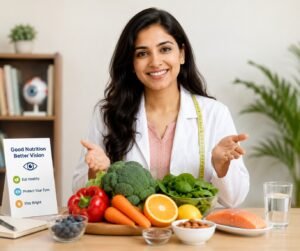
“Eat your carrots, they’re good for your eyes” almost everyone has heard this growing up. But is there actually science behind it, or is it just something parents say to get kids to finish their vegetables? Turns out, there’s real truth to the food-vision connection, though it’s a lot more detailed than just carrots.
So let’s go through what actually helps your eyes, and what’s just an old wives’ tale.
Why Does Diet Even Matter for Your Eyes?
Your eyes are constantly working, processing light, and dealing with oxidative stress from screens, sunlight, and pollutions. Just like every other organ, they need specific nutrients to function well and protect themselves from damage over time. Diet won’t fix existing refractive errors or reverse conditions like cataracts, but it genuinely supports long-term eye health and can slow down the progression of certain age-related conditions.
The Nutrients That Actually Matter
Vitamin A This one’s essential for your retina, particularly for night vision. A deficiency in Vitamin A is actually one of the leading
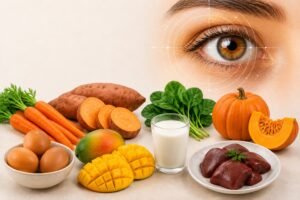
causes of preventable blindness globally. Good sources include carrots, sweet potatoes, spinach, and eggs.
Lutein and Zeaxanthin These two work together in the macula, the part of your retina responsible for sharp central vision. They act almost like natural sunglasses, filtering harmful blue light and protecting your eyes from oxidative damage.
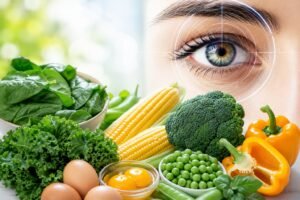
You’ll find them in leafy greens like spinach and kale, as well as in corn and egg yolks.
Omega-3 Fatty Acids Found in fish like salmon and mackerel, omega-3s support the health of the retina and also help manage dry eye
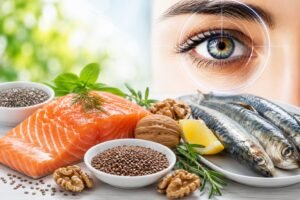
symptoms. People who eat fish regularly tend to show a lower risk of age-related macular degeneration.
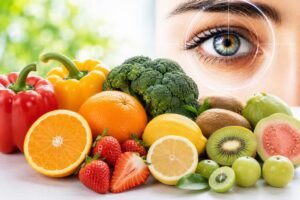
Vitamin C A strong antioxidant that supports the blood vessels in your eyes and may help slow the progression of cataracts and macular degeneration. Citrus fruits, bell peppers, and strawberries are excellent sources.
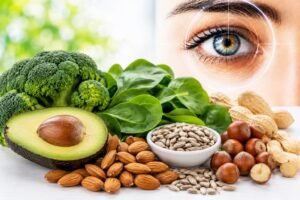
Vitamin E Works alongside Vitamin C to protect eye cells from free radical damage. Nuts, seeds, and vegetable oils are good everyday sources.
Zinc This mineral helps transport Vitamin A from the liver to the retina and plays a role in overall night vision. Found in foods like
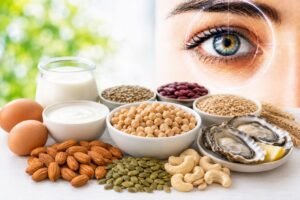
chickpeas, nuts, and dairy.
Foods Worth Adding to Your Plate
If you want a simple, doctor-approved list to actually follow, here it is:
- Leafy greens like spinach, kale, and methi
- Carrots and sweet potatoes
- Eggs, especially the yolk
- Fatty fish like salmon or mackerel
- Citrus fruits and berries
- Nuts and seeds, particularly almonds and walnuts
- Bell peppers
None of this requires a drastic diet overhaul. Just adding a few of these into your regular meals, consistently, makes a genuine difference over months and years.
What Diet Can and Cannot Do
Here’s the honest part most articles skip. A good diet supports eye health and may slow down certain age-related changes, but it cannot correct myopia, hyperopia, astigmatism, or reverse an existing cataract. If your vision problem is structural, it needs medical evaluation and treatment, not just dietary changes.
This is exactly why nutrition should be seen as a support system for your eyes, not a replacement for proper eye care. If you’ve been relying solely on food choices while ignoring blurry vision or other symptoms, that’s worth reconsidering.
When Should You See a Doctor Instead of Just Changing Your Diet?
If you’re experiencing blurry vision, frequent headaches, night vision difficulty, or any noticeable changes in your eyesight, diet alone isn’t going to fix that. A proper examination is needed to understand what’s actually going on.
The best eye doctors and specialists in Gurgaon can assess whether your symptoms are related to a nutritional gap or something that needs medical treatment. The Best Eye Hospital In Gurgaon has the diagnostic tools to check your retinal health in detail, going far beyond what a basic vision test would show.
If you’re already managing early cataracts alongside wanting to support your eye health through diet, a best eye clinic in Gurgaon for cataract surgery can guide you on what to priorities. A trusted best eye specialist in Gurugram will be honest about whether your concern is something nutrition can help with, or something that needs a more direct medical approach.
For ongoing eye health guidance, a reliable best eye center in Gurugram offering proper Best Eye Treatment in Gurgaon can combine nutritional advice with regular monitoring, so nothing gets missed along the way.
Conclusion
Good nutrition genuinely supports your eye health, and foods rich in Vitamin A, lutein, omega-3s, and antioxidants deserve a regular place on your plate. But diet is a support tool, not a cure. If your eyes have been bothering you, don’t just rely on a healthier meal plan get a proper check-up through trusted best eye care in Gurugram and make sure nothing more serious is being overlooked.
Book Your Consultation Today
At Barman Eye Care, Gurgaon, we use advanced technology for a painless and precise procedure. Our expert ophthalmologists ensure personalized care for the best results.
Take the first step toward clearer vision! Schedule your consultation and step into spring with confidence.
Call us today to book your appointment!