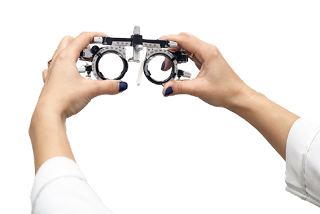



A lot of people live with early cataracts for months, sometimes even years, without realizing it. The changes happen so gradually that most people just assume their glasses prescription has changed again, or that their eyes are tired from screens. By the time they actually visit a doctor, the cataract is already well developed.
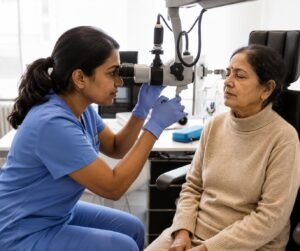
The good news is that diagnosing a cataract is straightforward, painless, and doesn’t take long. Here’s exactly what happens during a cataract evaluation and why each step matters.
It Usually Starts With a Symptom You Can’t Ignore
Most people finally book an appointment when something specific bothers them enough blurry or hazy vision that doesn’t improve with a new glasses prescription, increasing glare from headlights while driving at night, colors looking dull or washed out, or needing much brighter light to read comfortably.
These are classic early signs of a cataract. But none of them confirm the diagnosis on their own. That requires a proper eye examination.
The Diagnosis Process: Step by Step
Visual Acuity Test

This is the basic starting point, the standard chart on the wall where you read out letters from a distance. It tells the doctor how much your vision has been affected. A significant drop in visual acuity that can’t be corrected with glasses is one of the first indicators that something more than a refractive error is going on.
Slit Lamp Examination This is the most important test for diagnosing a cataract. A slit lamp is a specialized microscope that gives the doctor a magnified, detailed view of the structures at the front of your eye including the lens.
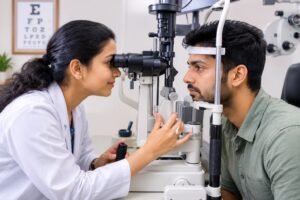
Under this light, even early or partial cloudiness in the lens becomes clearly visible. The doctor can also identify exactly where the cataract is located center, edges, or back of the lens which helps determine how advanced it is and how quickly it may progress.
Dilated Eye Examination
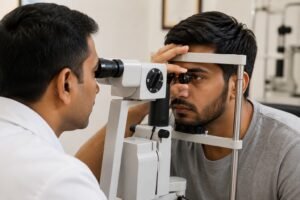
Before this test, eye drops are used to dilate your pupils widen them so the doctor can see deeper into the eye. This allows a thorough look at the lens as well as the retina and optic nerve at the back. It’s important because sometimes vision problems that seem like cataract symptoms are actually coming from the retina or optic nerve, not the lens. Ruling this out is essential before any surgical decision is made.
Tonometry
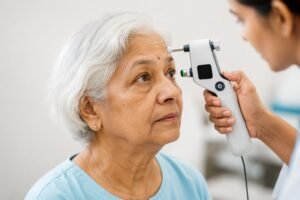
This test measures the pressure inside your eye. It’s included in most comprehensive eye exams because high eye pressure can indicate glaucoma, which sometimes exists alongside cataracts and needs to be addressed as part of the overall treatment plan.
Retinal Examination Once the pupil is dilated, the retina is checked carefully. If there’s an underlying retinal condition like macular degeneration or diabetic retinopathy present,
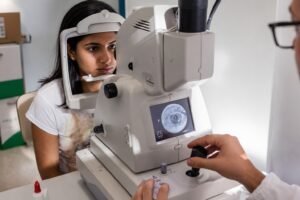
it can affect the visual outcome after cataract surgery. Knowing this in advance helps the surgeon and patient set realistic expectations.
Biometry / IOL Power Calculation If the cataract is significant enough that surgery is being considered, biometry is done to measure the exact dimensions of your eye its length, the curvature of the cornea, and the depth of the anterior chamber.
These measurements are used to calculate the precise power of the artificial lens that will be implanted during surgery. Getting this right is critical for a good visual outcome after the procedure.
Can Cataracts Be Detected Before Symptoms Show Up?
Yes, and this is one of the strongest arguments for regular eye check-ups even when your vision feels fine. During a routine slit lamp examination, a doctor can spot early lens changes well before they start affecting your vision. Catching it early doesn’t mean you’ll need surgery immediately but it means you and your doctor can monitor the progression and plan ahead rather than being caught off guard.
People over 40 especially benefit from annual eye exams, even if they have no complaints at all.
Why the Right Diagnosis Matters
Not all blurry vision is caused by cataracts. Retinal conditions, glaucoma, or corneal problems can produce very similar symptoms. A thorough diagnostic process rules out other causes and confirms whether cataract surgery is actually what’s needed or whether something else needs to be treated first.

Going to the best eye center in Gurugram for your cataract evaluation ensures you’re getting a complete diagnostic workup, not just a quick look and a surgery recommendation. Every test in the process exists for a reason, and skipping steps can lead to missed conditions or poorly planned surgery outcomes.
When surgery is confirmed as the right step, choosing the best cataract surgeon in Gurgaon means the procedure is performed with precision, the right lens is selected for your lifestyle, and your recovery is properly monitored because diagnosis is just the beginning, not the finish line.
Conclusion
Diagnosing a cataract is a detailed, layered process not just a quick look in your eye. From the basic vision chart to biometry for lens power calculation, each step adds important information that shapes your treatment plan. If you’ve been noticing changes in your vision and keep pushing the appointment back, this is your reminder to stop waiting. A proper
diagnosis takes less than an hour and can tell you everything you need to know about what’s going on with your eyes.
Book Your Consultation Today
At Barman Eye Care, Gurgaon, we use advanced technology for a painless and precise procedure. Our expert ophthalmologists ensure personalized care for the best results.
Take the first step toward clearer vision! Schedule your consultation and step into spring with confidence.
Call us today to book your appointment!